Apollo's priestess.
Apollo served 'the wild man' king Admetus for nine years.
Admetus treated him well and so Apollo rewarded him...
Apollo's gift to Admetus - and this story is found in the play Alcestis by Euripides - recalls a theme in Mesopotamian myths; it seems that the numbers must add up, every death must provide a body for the Underworld. And so, Admetus could only avoid death if someone took his place, recalling the older story of Geshtinanna and Dumuzi.
Rot is also a power of sun...
But I see in the stories of Apollo, another name.
Apollo
Aplu..
Aplu Enlil...a name from the Hurrian cultural crossroad?
Aplu means Son of Enlil.
Apollo is therefore the Enlil of the Underworld?
Also known as Lord of the Great City.
Apollo, Nir-erra-Gal
Nergal.
But perhaps there was a less polite version...
A more ecstatic union.
Each time
The priestess
Suspended above...
Took the breath of Apollo
Not into her mouth, but...
Between her legs.
Was she 'married' to the God?
No mortal woman ever truly married a god.
No woman married Apollo.
Possession by Apollo was seizure
Male or female seized..
Taken for the ride of their life...
The priestess was his gift
An offering.
A transaction?
The woman, in return for the oracle.
Originally it happened only once a year
The 7th of Bysios.
Then it became once a month for nine months, until Apollo left Delphi
A dolphin, swimming in a sea of stars.

Leaving his brother
The Winter king Dionysos - Fire deep in the heart of the wood...
"Admetus, you are fated to die soon. But I give you a gift, if you can find someone to agree to take your place Death will pass you by..."
Alcestis, his wife (her name means Power in the Home) took his fate to herself, choosing to die to save him. She left her husband, her children sobbing on the cold, hard ground...and travelled onwards, to Persephone's garden.
Apollo's gift to Admetus - and this story is found in the play Alcestis by Euripides - recalls a theme in Mesopotamian myths; it seems that the numbers must add up, every death must provide a body for the Underworld. And so, Admetus could only avoid death if someone took his place, recalling the older story of Geshtinanna and Dumuzi.
But, here's another theme - Apollo has knowledge and to some extent he has power over Death. This image conflicts with modern interpretations of Apollo as a sun god of intellect and music. Perhaps this has more to do with the modern symbolism of the sun.
The sun wasn't always seen as constantly bright...and nor was the 'Netherworld' always an 'Underworld'. Apollo so often portrayed as a bright, golden god of intellect and culture is also the black sun: the Lord of the dark power of the sun, for he is also Lord of rot and decay, and of plague. The idea of the Black Sun can be found in The Epic of Gilgamesh. Here we are given the image of the sun returning from the night-time journey in the 'underworld' being blown alight (like charcoal)...as it rushes through a tunnel that links the land of day with the Underworld - or the land of night? The geography is difficult to translate, because a concept of an upper, middle and lower world isn't as constant as we are led to believe. Likewise in Egyptian iconography, the sun travels beyond the mountains.
The sun wasn't always seen as constantly bright...and nor was the 'Netherworld' always an 'Underworld'. Apollo so often portrayed as a bright, golden god of intellect and culture is also the black sun: the Lord of the dark power of the sun, for he is also Lord of rot and decay, and of plague. The idea of the Black Sun can be found in The Epic of Gilgamesh. Here we are given the image of the sun returning from the night-time journey in the 'underworld' being blown alight (like charcoal)...as it rushes through a tunnel that links the land of day with the Underworld - or the land of night? The geography is difficult to translate, because a concept of an upper, middle and lower world isn't as constant as we are led to believe. Likewise in Egyptian iconography, the sun travels beyond the mountains.
The theme of Apollo as a solar god including his dark solar aspect, is described in a Homeric hymn, describing his arrival in Delphi
When he arrived as a dolphin bringing with him priests from Crete a great monster was there...at the Castalian Spring.
When he arrived as a dolphin bringing with him priests from Crete a great monster was there...at the Castalian Spring.
Whosoever met the dragoness, the day of doom would sweep him away, until the lord Apollo, who deals death from afar, shot a strong arrow at her. Then she, rent with bitter pangs, lay drawing great gasps for breath and rolling about that place. An awful noise swelled up unspeakable as she writhed continually this way and that amid the wood: and so she left her life, breathing it forth in blood. [+]
And the holy strength of Helios made her rot away there; wherefore the place is now called Pytho, and men call the lord Apollo by another name, Pythian; because on that spot the power of piercing Helios made the monster rot away.[+]
Rot is also a power of sun...
But I see in the stories of Apollo, another name.
Apollo
Aplu..
Aplu Enlil...a name from the Hurrian cultural crossroad?
Aplu means Son of Enlil.
Apollo is therefore the Enlil of the Underworld?
Also known as Lord of the Great City.
Apollo, Nir-erra-Gal
Nergal.
His temple
Delphi.
Became a war memorial
Celebrating the defeats of city by city.
3 coiled serpents upon a tripod..
The Battle of Plataea.
A lord of rot, plague and decay would be pleased by this...
Delphi was most famous for its oracle, for predictions of the future.
Another aspect of the sun is that it sees all.
And it is as if it is the black sun that has the ability to see all that is happening in the future.
I don't understand how the Netherworld is connected with seeing the future, and yet the whole basis of hepatoscopy (reading the future based on the liver of a dying animal - dying because its liver was being cut out! relied upon this principal of future echoes. The most successful readings came from the freshest liver.

Perhaps my inability to understand rests upon my culture. Mesopotamian time (Hebrew time...) is backwards (!) compared to English time. In Mesopotamian and Hebrew language the past is described as before us and the future is behind, unseen. This makes total sense. I cannot see the future, and everything I see is the result of past action. It makes no sense to say, as we say in English that the future is before us...
So..the future as behind us, and we face the past.
The future belongs in the place we cannot see.
Only the sun can travel from the future to the past...
Ultimately though it was the job of the priestess to unite with Apollo.
To become possessed by the god.
Her title of Pythia has led many to assume that noxious gasses that smelt of rot, seeped up from cracks in the rock, and her intoxication was the cause of her power.
Delphi.
Became a war memorial
Celebrating the defeats of city by city.
3 coiled serpents upon a tripod..
The Battle of Plataea.
A lord of rot, plague and decay would be pleased by this...
Delphi was most famous for its oracle, for predictions of the future.
Another aspect of the sun is that it sees all.
And it is as if it is the black sun that has the ability to see all that is happening in the future.
I don't understand how the Netherworld is connected with seeing the future, and yet the whole basis of hepatoscopy (reading the future based on the liver of a dying animal - dying because its liver was being cut out! relied upon this principal of future echoes. The most successful readings came from the freshest liver.
A description of hepatoscopy is given in the Book of Ezekiel 21:21:
Once again there is a connection between Apollo and underworld plague god, Nergal, this time from the Iliad."For the king of Babylon stands at the parting of the way, at the head of the two ways, to use divination; he shakes the arrows, he consults the household idols, he looks at the liver."
Apollo, the son of Leto and Zeus, angered by the king, brought an evil plague on the army, so that the men were dying - Link...

Perhaps my inability to understand rests upon my culture. Mesopotamian time (Hebrew time...) is backwards (!) compared to English time. In Mesopotamian and Hebrew language the past is described as before us and the future is behind, unseen. This makes total sense. I cannot see the future, and everything I see is the result of past action. It makes no sense to say, as we say in English that the future is before us...
So..the future as behind us, and we face the past.
The future belongs in the place we cannot see.
Only the sun can travel from the future to the past...
Ultimately though it was the job of the priestess to unite with Apollo.
To become possessed by the god.
Her title of Pythia has led many to assume that noxious gasses that smelt of rot, seeped up from cracks in the rock, and her intoxication was the cause of her power.
But perhaps there was a less polite version...
A more ecstatic union.
Each time
The priestess
Suspended above...
Took the breath of Apollo
Not into her mouth, but...
Between her legs.
Was she 'married' to the God?
No mortal woman ever truly married a god.
No woman married Apollo.
Possession by Apollo was seizure
Male or female seized..
Taken for the ride of their life...
The priestess was his gift
An offering.
A transaction?
The woman, in return for the oracle.
Originally it happened only once a year
The 7th of Bysios.
Then it became once a month for nine months, until Apollo left Delphi
A dolphin, swimming in a sea of stars.
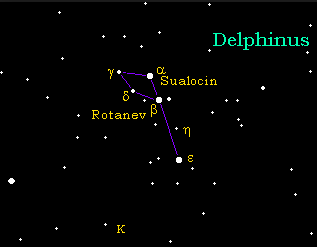
Leaving his brother
The Winter king Dionysos - Fire deep in the heart of the wood...

